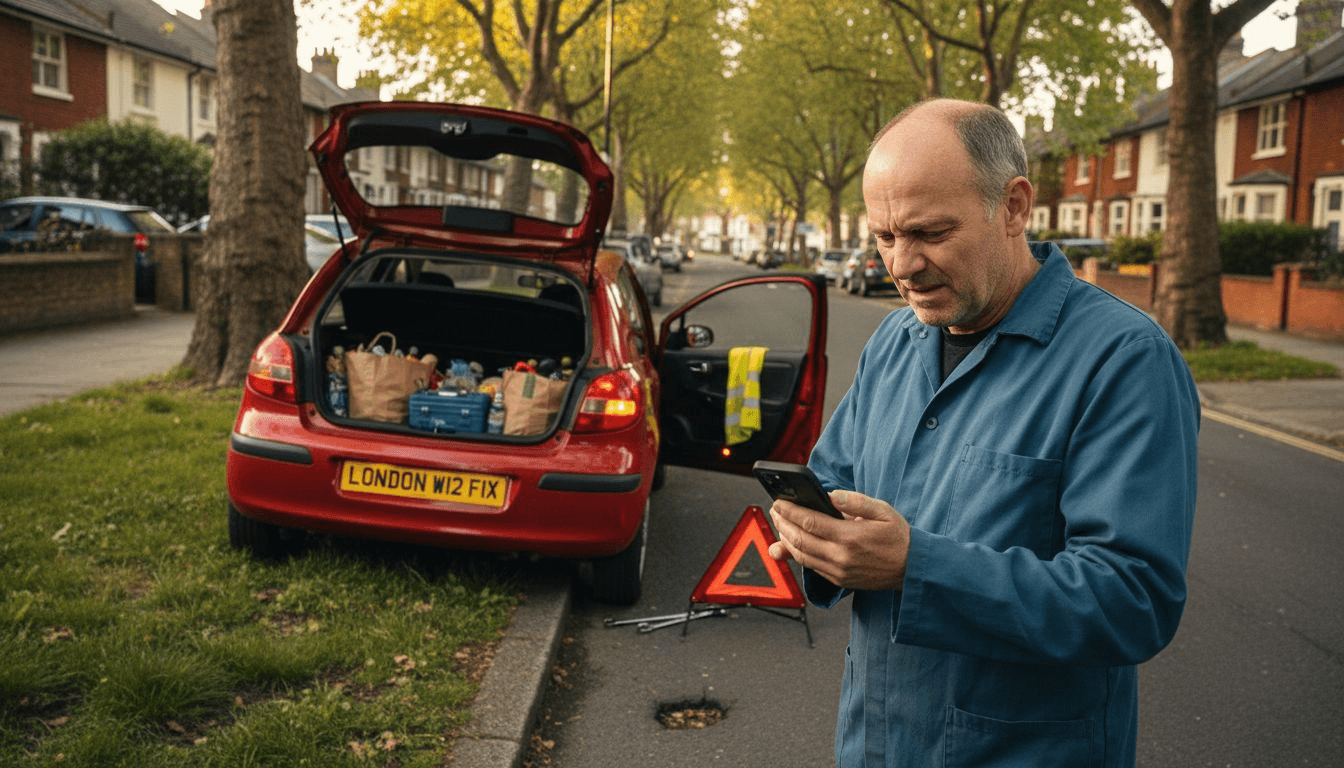
Breaking down on a busy West London road creates immediate stress and uncertainty. Whether you're stuck during rush hour or stranded late at night, knowing exactly what to do transforms panic into calm, methodical action. This guide walks you through preparation essentials, immediate response steps, and post-breakdown verification to keep you safe and get you moving again quickly.
Table of Contents
- Preparing For A Vehicle Breakdown: What You Need
- Step-By-Step Actions When Your Vehicle Breaks Down
- Special Considerations: Electric Vehicles And Vulnerable Passengers
- After The Breakdown: What To Expect And Verify
- Get Reliable Roadside Assistance With Empire Mobile Tyres And Recovery
- FAQ
Key takeaways
| Point | Details | |-------|---------|| | Quick calm action saves lives | Moving off the road safely and using hazard lights immediately reduces accident risk during breakdowns. | | Preparation reduces panic | Keeping essential tools, breakdown cover details, and emergency contacts ready cuts response time significantly. | | Provider choice impacts wait time | Response times vary widely between breakdown services, affecting how long you wait roadside. | | Special situations need extra planning | Electric vehicles and vulnerable passengers require specific considerations and potentially longer assistance times. |
Preparing for a vehicle breakdown: what you need
Smart preparation starts before you turn the ignition. Keeping essential items in your vehicle transforms a potential disaster into a manageable inconvenience.
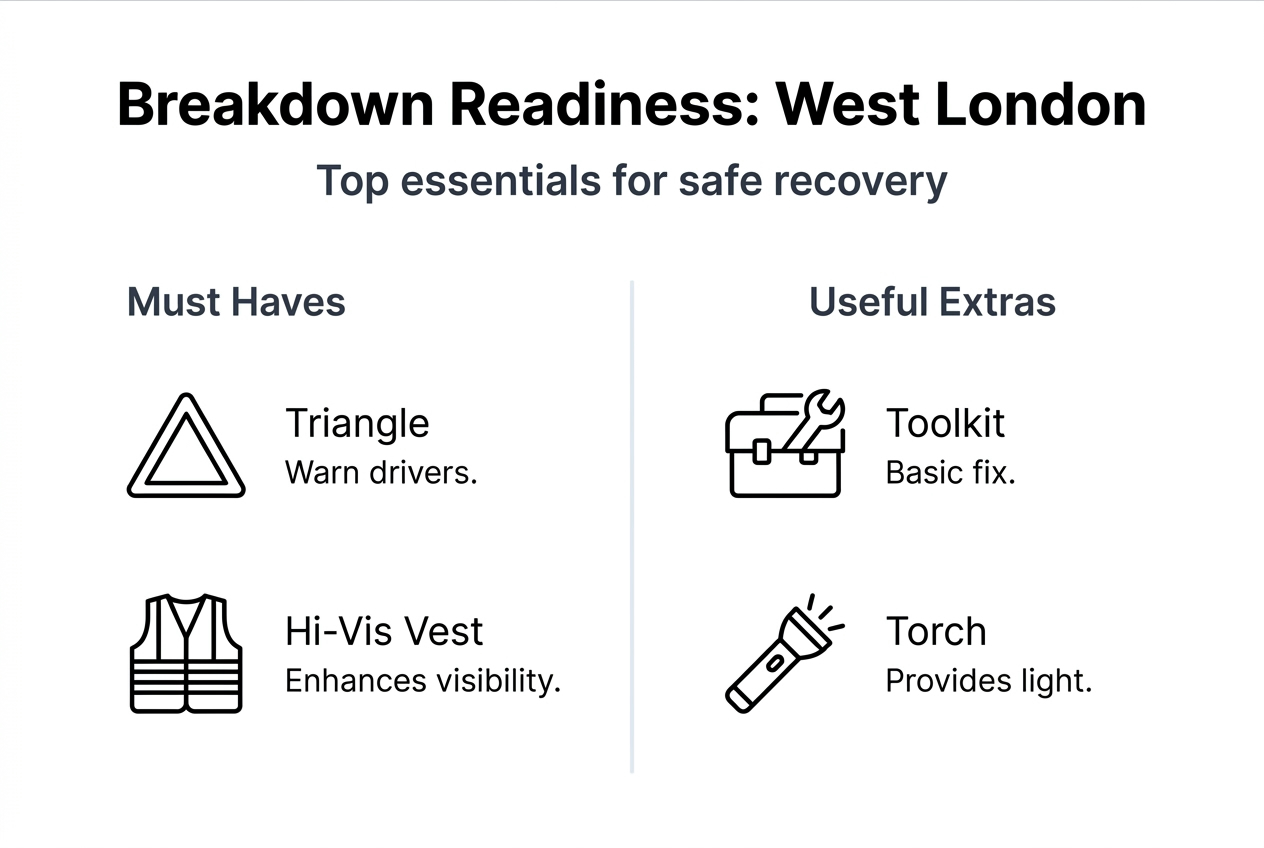
Your car should always contain a warning triangle, high-visibility vest, basic toolkit, flashlight with fresh batteries, and a first aid kit. Add a portable phone charger since dead batteries compound breakdown problems. Keep bottled water and non-perishable snacks for extended waits.
Breakdown cover represents your safety net. The AA car breakdown cover varies depending on coverage level, offering roadside assistance, national recovery, or home start options. Compare providers based on coverage area, response guarantees, and special services like onward travel or accommodation.
| Coverage Type | Typical Cost Range | Key Features | Best For |
|---|---|---|---|
| Roadside Only | £40-£80/year | Repairs at breakdown location | Local drivers, newer vehicles |
| Recovery | £80-£150/year | Towing to garage, roadside fixes | Frequent travelers, older cars |
| Comprehensive | £150-£250/year | Home start, onward travel, accommodation | Long distance drivers, families |
Store your breakdown provider's number in your phone contacts and write it on a card in your glove compartment. Network coverage fails sometimes, so having multiple access methods matters.
Keep your vehicle registration, insurance documents, and driver's license easily accessible. Breakdown operators need this information to verify your coverage and send appropriate assistance.
Pro Tip: Check your tire pressure monthly and top up engine oil regularly. These simple 5-minute checks prevent roughly 30% of breakdowns before they happen.
Step-by-step actions when your vehicle breaks down
The moment your vehicle fails, your actions in the next 60 seconds determine your safety level. Follow this sequence without deviation.
- Activate your hazard lights immediately, even before pulling over.
- Steer toward the shoulder or safest available spot off the main traffic lane.
- Apply your parking brake and shift to park or neutral.
- Exit the vehicle only if safe; otherwise remain inside with seatbelts fastened.
- Place your warning triangle 45 meters behind your vehicle if you can do so safely.
- Put on your high-visibility vest before stepping onto the roadway.
- Move passengers behind roadside barriers if available, away from traffic.
- Call your breakdown provider with your exact location, vehicle details, and problem description.
Providing precise location information speeds response significantly. Use landmarks, road numbers, junction names, or what3words coordinates. Vague descriptions like "somewhere on the A40" delay help.
Never attempt complex roadside repairs yourself. Modern vehicles contain intricate systems requiring specialized tools and expertise. Your safety matters more than fixing the problem immediately.
Response times fluctuate based on time, location, and provider capacity. Peak hours and adverse weather extend waits.
Stay with your vehicle unless instructed otherwise by emergency services. Leaving it unattended invites theft or additional traffic hazards. Keep doors locked if remaining inside and crack a window for ventilation.
Pro Tip: Take photos of your vehicle position, warning triangle placement, and any visible damage. This documentation proves valuable for insurance claims and helps breakdown operators understand your situation before arrival.
If you break down on a motorway, different rules apply. Exit at the nearest junction if possible. On the hard shoulder, exit from the passenger side and move behind the barrier. Emergency phones along motorways connect directly to specialized services. Empire Mobile Tyres and Recovery provides rapid response across West London including motorway assistance.
Special considerations: electric vehicles and vulnerable passengers
Electric vehicle breakdowns introduce unique complications. EV breakdowns require specialized equipment and trained technicians, extending wait times beyond traditional vehicle recovery.
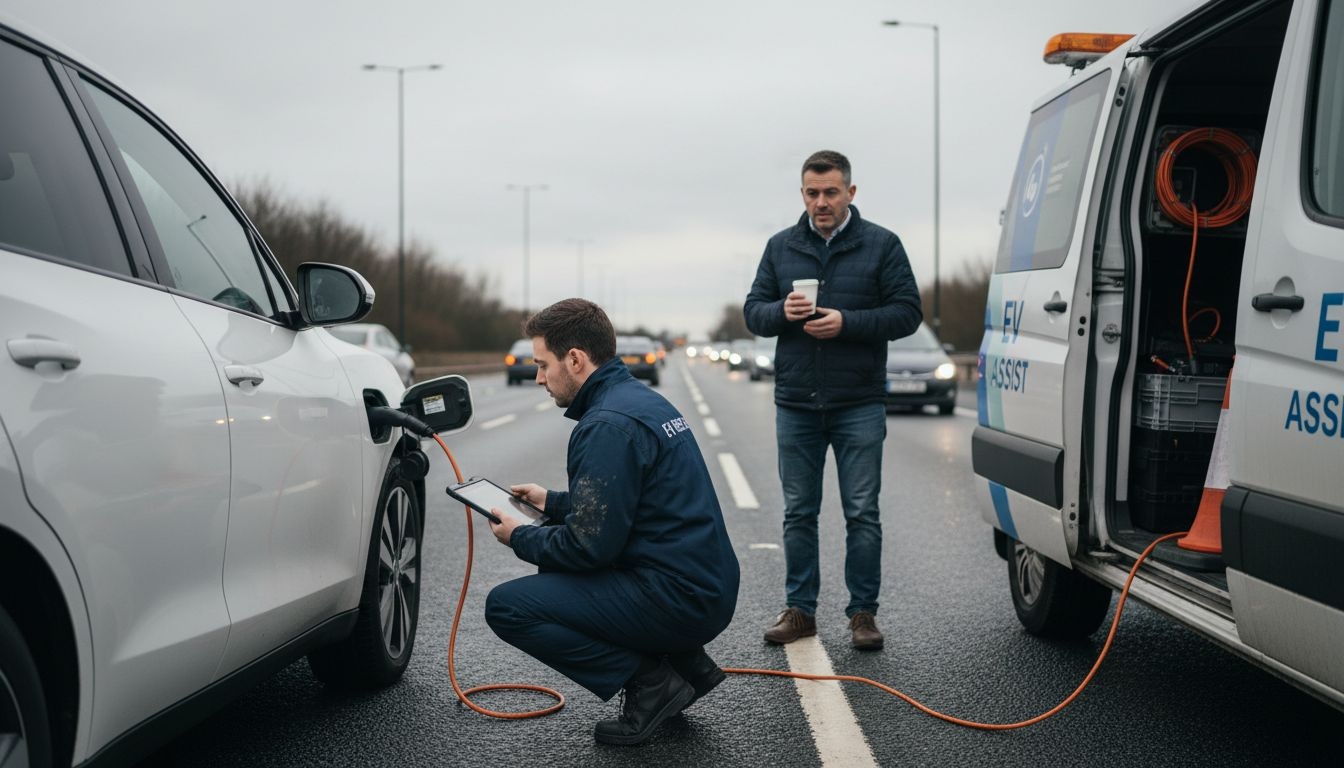
High voltage systems prevent standard recovery vehicles from handling EVs safely. Flatbed transporters become necessary for many situations. Battery management system failures require diagnostic equipment most roadside technicians lack.
When your EV breaks down, immediately inform your breakdown provider about the vehicle type. Request EV-qualified assistance to avoid sending inappropriate recovery vehicles that cannot help.
- Keep your EV charging card and app credentials accessible for technicians to test charging systems
- Note your battery charge level and any warning messages displayed before the breakdown
- Understand your vehicle's 12-volt auxiliary battery often causes breakdowns unrelated to the main battery
- Research your breakdown provider's EV capabilities before purchasing coverage, not after problems arise
| Factor | Electric Vehicles | Traditional Vehicles |
|---|---|---|
| Average Wait Time | 90-180 minutes | 30-90 minutes |
| Recovery Method | Flatbed transport usually required | Towing or roadside repair possible |
| Technician Requirements | EV certification needed | Standard mechanical training |
| Diagnostic Complexity | Software and battery systems | Mechanical components primarily |
Vulnerable passengers demand heightened attention during breakdowns. Breakdown services should show compassion toward customers with disabilities or young children, prioritizing their comfort and safety.
Families with infants need climate control consideration. Extreme temperatures inside stationary vehicles endanger small children quickly. Request priority assistance if traveling with babies or elderly passengers.
Passengers with mobility limitations face additional challenges exiting vehicles and waiting roadside. Communicate these needs clearly when calling for assistance. Reputable providers adjust their response accordingly, potentially sending vehicles equipped with wheelchair access or climate-controlled waiting areas.
Keep medications, baby supplies, and mobility aids readily accessible during breakdowns. Pack a small emergency bag for longer journeys containing essentials for vulnerable passengers.
After the breakdown: what to expect and verify
Recovery timelines vary dramatically. Vehicle breakdown recovery times depend on location, traffic conditions, technician availability, and problem complexity.
| Service Type | Urban Areas (West London) | Rural Areas | Motorway |
|---|---|---|---|
| Roadside Repair | 30-60 minutes | 60-120 minutes | 45-90 minutes |
| Recovery/Towing | 60-90 minutes | 90-180 minutes | 60-120 minutes |
| Specialized (EV) | 90-180 minutes | 120-240+ minutes | 90-150 minutes |
When the technician arrives, verify their identification and company affiliation before allowing vehicle access. Legitimate providers carry photo ID and marked vehicles.
Inspect your vehicle after any roadside repair or recovery. Check for new damage, ensure all personal belongings remain inside, and confirm the repair actually resolves your initial problem before the technician departs.
Request detailed paperwork documenting services performed, parts used, and any recommendations for follow-up repairs. This documentation proves essential for warranty claims and insurance purposes.
- Ask for a receipt listing specific work completed, not generic "breakdown assistance"
- Photograph your vehicle before and after recovery to document any transport damage
- Test critical systems like lights, brakes, and steering before driving away
- Request the technician's direct contact information for follow-up questions
- Confirm whether temporary repairs require immediate garage attention or provide safe operation
If service quality disappoints, document everything immediately. Note technician names, arrival times, actions taken, and specific problems. Contact your breakdown provider's customer service within 24 hours while details remain fresh.
Most reputable providers offer formal complaint procedures. Escalate through these channels before considering external options. Trading Standards or automotive ombudsman services handle unresolved disputes.
Patience becomes crucial during peak demand periods. Winter weather, holiday weekends, and major traffic incidents create service backlogs affecting all providers. Empire Mobile Tyres and Recovery maintains West London focus, potentially offering faster local response than national services stretched thin.
Schedule a comprehensive vehicle inspection after any breakdown. Underlying problems often contribute to failures. Addressing root causes prevents repeat incidents and identifies wear requiring attention.
Get reliable roadside assistance with Empire Mobile Tyres and Recovery
When breakdown strikes, you need professionals who understand West London roads and arrive quickly. Empire Mobile Tyres and Recovery delivers exactly that, combining over 10 years of automotive expertise with genuine local knowledge.

Their mobile service model eliminates tow truck waits for many common problems. Tire failures, dead batteries, lockouts, and fuel delivery issues get resolved on-site, getting you back on the road faster. When recovery becomes necessary, their experienced team handles it professionally with minimal stress.
Save their contact information now, before you need it. Quick access to reliable assistance transforms breakdown anxiety into manageable inconvenience. Empire Mobile Tyres and Recovery serves North and West London with rapid response and customer-focused service that prioritizes your safety and time.
FAQ
How long does roadside assistance typically take to arrive after a breakdown?
Response times in West London range from 30 minutes to over 2 hours depending on your provider, time of day, and location. Peak traffic periods and adverse weather extend these windows significantly. National providers often quote average times but local services sometimes respond faster within their coverage area.
What should I do if my electric vehicle breaks down?
Contact your breakdown provider immediately and specify you drive an EV. EV breakdowns require specialized equipment and trained technicians, potentially doubling standard wait times. Remain patient as flatbed recovery often becomes necessary rather than simple towing.
How can I ensure my safety during a breakdown on busy West London roads?
Move your vehicle completely off the traffic lane if mechanically possible, activate hazard lights instantly, and wear a high-visibility vest before exiting. Place warning triangles 45 meters back if safe to do so. Stay behind roadside barriers when available or remain inside your locked vehicle with seatbelts fastened if no safe waiting area exists.
Does breakdown cover include getting my passengers home?
Comprehensive breakdown policies typically include onward travel benefits covering taxi fares, rental vehicles, or accommodation when repairs cannot be completed roadside. Basic roadside-only coverage rarely includes these extras. Review your specific policy terms or upgrade to recovery-plus packages if passenger continuation matters for your travel patterns.
Should I attempt any repairs myself before calling for assistance?
Only attempt repairs you feel completely confident performing safely. Changing a flat tire in a safe location with proper equipment makes sense if you know how. Complex mechanical, electrical, or engine repairs belong to professionals with diagnostic tools and expertise. Personal safety and avoiding additional damage outweigh saving time with amateur fixes.