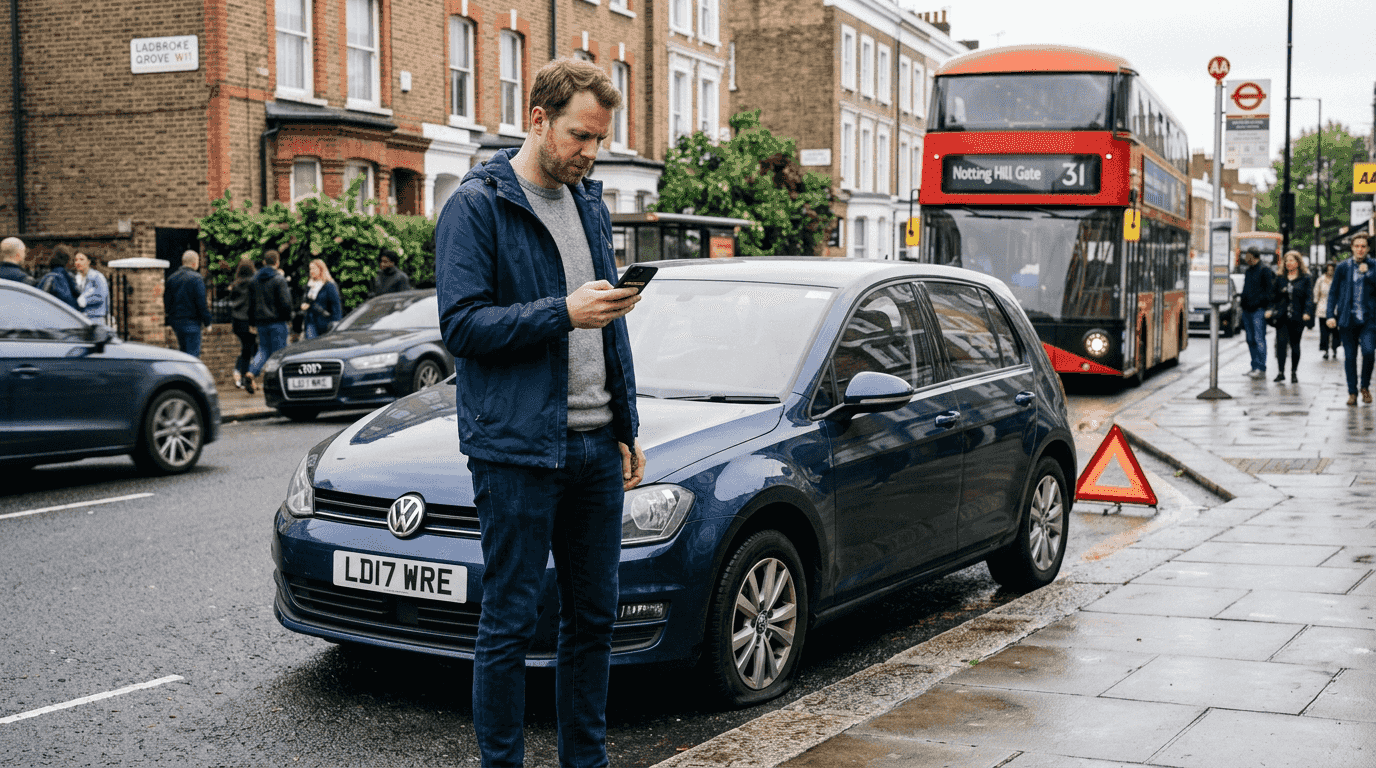
Nearly 40% of UK vehicles have unsafe tires, a startling reality that puts thousands of West London drivers at risk every day. Tire emergencies, from sudden blowouts to slow punctures, can strike without warning and leave you stranded on busy roads. Understanding what qualifies as a tire emergency, why they happen, and how to respond quickly can mean the difference between a minor inconvenience and a serious safety hazard. This guide walks you through the common causes of tire failures, practical recognition and response strategies, and how mobile tire services restore your mobility fast when emergencies occur.
Table of Contents
- Understanding What Tire Emergencies Are
- Why Tire Emergencies Happen: Common Causes And Risks
- Recognizing And Responding To Tire Emergencies Quickly
- Preventing Tire Emergencies: Maintenance And Safety Tips For West London Drivers
- How Harrow Mobile Tyres And Recovery Can Help In Tire Emergencies In West London
Key takeaways
| Point | Details |
|---|---|
| Unsafe tire rates are rising | The combined illegal and barely legal tire rate jumped from 27.0% in 2000 to 39.5% in 2025, increasing emergency risks. |
| Blowouts pose severe dangers | Rapid pressure loss from structural failure can cause loss of vehicle control, especially at high speeds. |
| Mobile services offer instant help | On-site tire replacement and repair by professionals minimize downtime and restore safety immediately. |
| Regular checks prevent failures | Monitoring tread depth and pressure prevents emergencies and avoids MOT failures caused by low tread. |
Understanding what tire emergencies are
Tire emergencies encompass any sudden or critical tire failure that compromises your vehicle's safety or mobility. The most common types include flat tires from punctures, blowouts from rapid pressure loss), tread separations where the outer layer peels away, and sidewall damage from impacts or cuts. Each scenario creates immediate risks, from loss of steering control to complete immobilization on the roadside.
Flat tires typically result from slow leaks or punctures, giving you some warning through gradual pressure loss and handling changes. Blowouts, however, happen instantaneously. You hear a loud bang, feel violent shaking, and the vehicle pulls sharply to one side. This sudden event leaves no time for preparation, making it far more dangerous than a gradual flat.
Recognizing the warning signs early can prevent full-blown emergencies. Watch for unusual vibrations through the steering wheel, pulling to one side during straight-line driving, visible bulges or cracks in the sidewall, or a dashboard tire pressure warning light. Any of these symptoms demands immediate attention, whether through roadside inspection or professional evaluation.
Knowing these basics empowers you to act decisively. When you understand the difference between a manageable slow leak and a critical blowout, you can assess the situation accurately and call for the right help. West London's dense traffic and urban roads make quick, informed responses essential to your safety and that of other drivers.
Why tire emergencies happen: common causes and risks
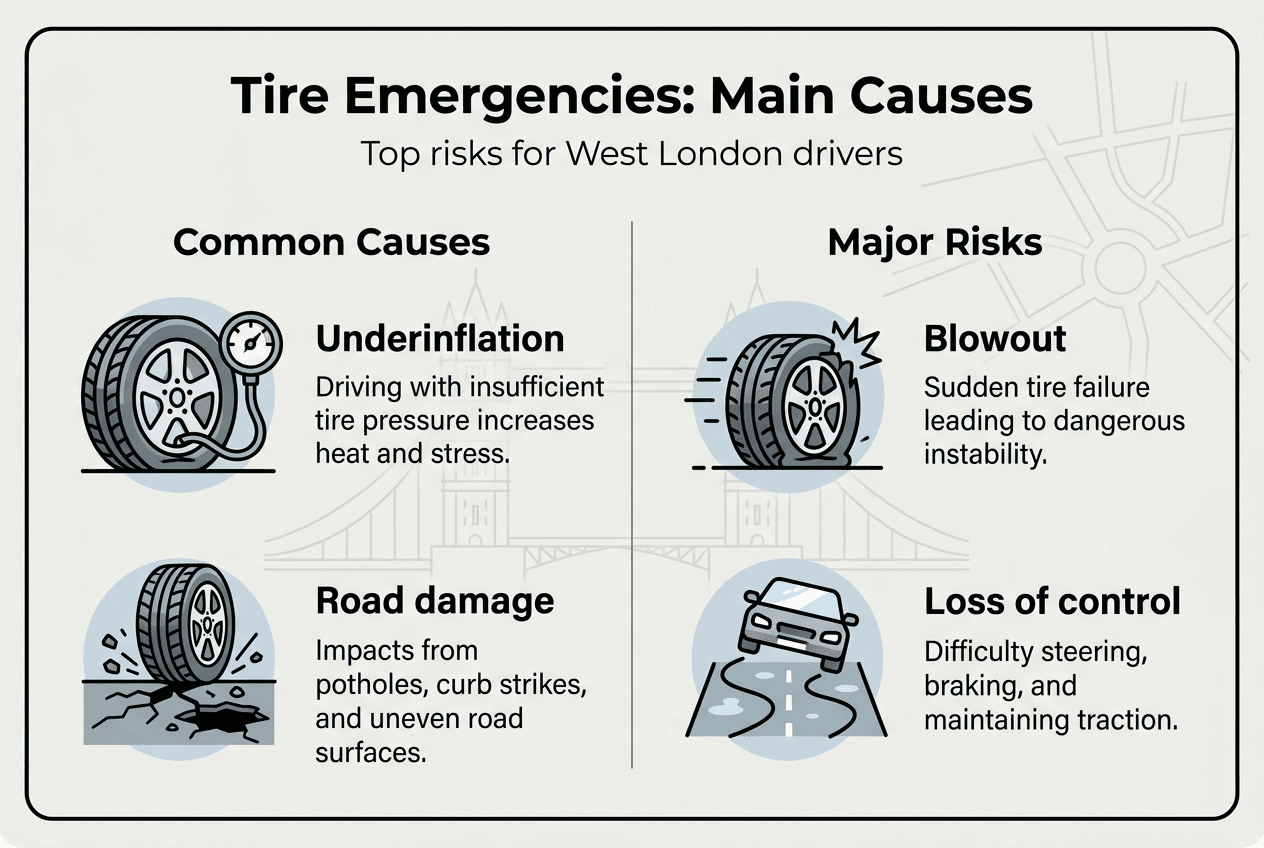
Tire emergencies stem from a combination of wear, neglect, and external hazards. The rising rate of barely legal tires from 17.0% to 31.8% between 2000 and 2025 reveals a troubling trend: more drivers are pushing their tires to the legal limit, dramatically increasing failure risk. When tread depth approaches the 1.6mm minimum, grip deteriorates and the tire becomes vulnerable to punctures and blowouts.
Underinflation ranks as a leading cause of blowouts. When tire pressure drops below recommended levels, the sidewalls flex excessively during rotation, generating intense heat. This heat buildup leads to structural failure, causing the tire to burst suddenly. Many drivers overlook regular pressure checks, especially during temperature fluctuations common in the UK climate.
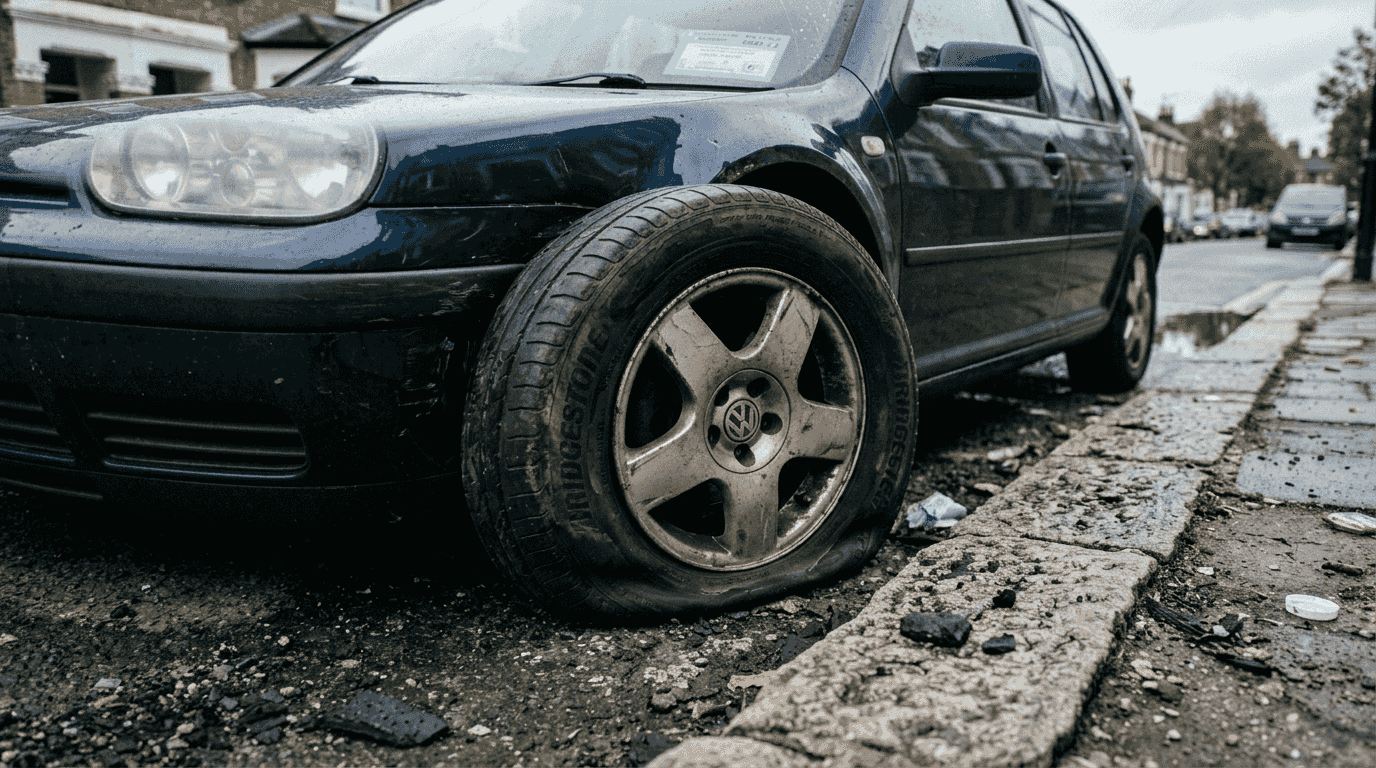
Overloading your vehicle places extreme stress on tires, forcing them to support weight beyond their design capacity. This strain accelerates wear, increases heat generation, and raises the likelihood of catastrophic failure. Always consult your vehicle's load rating and avoid exceeding it, particularly when carrying passengers or cargo.
Road hazards present constant threats on West London streets. Potholes, debris, curbs, and sharp objects can cause immediate punctures or hidden damage that manifests later as a blowout. Even a seemingly minor impact can weaken the tire's internal structure, creating a ticking time bomb.
The data paints a sobering picture:
| Tire Condition | Percentage (2025) | Risk Level |
|---|---|---|
| Illegal tread depth | 7.7% | Critical |
| Barely legal tread | 31.8% | High |
| Combined unsafe rate | 39.5% | Alarming |
Vehicle safety inspections consistently identify tires as a top MOT failure category. Worn tread, improper inflation, and visible damage account for thousands of failed tests annually. This reinforces the need for proactive maintenance rather than reactive emergency responses. By addressing tire health before problems escalate, you protect yourself and avoid the inconvenience and expense of roadside emergencies.
Pro Tip: Set a monthly reminder on your phone to check tire pressure and tread depth. This simple habit catches problems early and prevents most emergencies before they start.
Recognizing and responding to tire emergencies quickly
When a tire emergency strikes, your immediate actions determine the outcome. The first sign is often a sudden pull to one side as the damaged tire loses grip. You might hear a loud pop or hissing sound, feel intense vibration through the steering wheel, or notice the vehicle becoming difficult to control. Recognizing these symptoms instantly allows you to respond before the situation worsens.
Here's how to handle a tire emergency safely:
- Maintain a firm grip on the steering wheel with both hands to counteract the pull from the damaged tire.
- Resist the urge to brake hard, which can cause loss of control or a spin.
- Ease off the accelerator gently, allowing the vehicle to slow naturally.
- Signal your intention and steer smoothly toward the road edge or a safe stopping area.
- Once stopped, activate hazard lights and assess the damage from a safe position.
- Contact a mobile tire service for immediate on-site assistance rather than attempting a roadside repair in traffic.
Speed amplifies danger during a blowout. High speeds make vehicle control significantly more difficult, turning a manageable incident into a potential crash. If you're traveling at motorway speeds when a blowout occurs, the forces involved are extreme. Your priority is controlled deceleration and safe positioning, not speed.
Panic is your enemy. Drivers who jerk the wheel or slam the brakes often make the situation worse. Stay calm, focus on smooth inputs, and trust your vehicle's remaining tires to provide stability as you slow down. Modern vehicles are designed to handle tire failures if you respond correctly.
Once you're safely stopped, evaluate whether you can change the tire yourself or need professional help. In West London's busy traffic, attempting a roadside tire change can be dangerous. Mobile tire services reach you quickly, equipped with the tools and expertise to replace or repair your tire on-site, getting you back on the road safely.
Pro Tip: Keep an emergency kit in your vehicle with a flashlight, warning triangle, high-visibility vest, and the contact details for reliable mobile tire assistance. These items make any emergency easier to manage and keep you visible to other drivers.
Preventing tire emergencies: maintenance and safety tips for West London drivers
Prevention beats emergency response every time. Regular tire maintenance dramatically reduces your risk of sudden failures and keeps you compliant with UK safety standards. Low tire tread is the most common cause of MOT failure, making proactive checks essential not just for safety but for legal compliance.
Start with monthly tread depth inspections. Use a tread depth gauge or the simple 20p coin test: insert the coin into the tread grooves, and if the outer band is visible, your tread is below the legal 1.6mm minimum. Check multiple points across each tire, as wear patterns vary. Uneven wear often signals alignment or suspension issues that need professional attention.
Tire pressure deserves equal attention. Check pressure when tires are cold, before driving, using a reliable gauge. Refer to the placard inside your driver's door or fuel filler cap for the correct PSI. Underinflation and overinflation both create problems: too low causes heat buildup and blowouts, too high reduces grip and causes harsh ride quality.
Avoid overloading your vehicle. Every car has a maximum load rating found in the owner's manual. Exceeding this limit stresses tires beyond their design capacity, accelerating wear and increasing failure risk. Distribute weight evenly and remove unnecessary items from your trunk to reduce strain.
Inspect for visible damage regularly. Look for cuts, bulges, cracks, or embedded objects in the tread or sidewall. West London's pothole-riddled streets can cause hidden damage, so after hitting a significant pothole, inspect your tires carefully or have a professional check them.
Maintenance checklist:
- Check tire pressure monthly and before long trips
- Inspect tread depth using a gauge or 20p coin test
- Rotate tires every 6,000 to 8,000 miles for even wear
- Examine sidewalls for cuts, bulges, or cracks
- Avoid overloading and remove excess weight from the vehicle
- Replace tires when tread reaches 3mm for optimal safety, not just the 1.6mm legal minimum
Consider using tire pressure monitoring systems or smartphone apps that alert you to pressure changes in real time. These tools catch slow leaks early, giving you time to address them before they become emergencies.
| Maintenance Task | Frequency | Benefit |
|---|---|---|
| Pressure check | Monthly | Prevents blowouts and improves fuel economy |
| Tread inspection | Monthly | Ensures legal compliance and grip |
| Rotation | Every 6,000-8,000 miles | Promotes even wear and extends tire life |
| Professional inspection | Annually or after impacts | Detects hidden damage early |
Pro Tip: Replace tires when tread depth reaches 3mm rather than waiting for the 1.6mm legal minimum. This extra margin significantly improves wet weather grip and reduces emergency risk, especially on West London's often-wet roads.
How Harrow Mobile Tyres and Recovery can help in tire emergencies in West London
When a tire emergency leaves you stranded, you need help that arrives fast and gets you moving again without delay. Harrow Mobile Tyres and Recovery specializes in on-site tire services throughout West London, bringing professional expertise directly to your location whether you're at home, work, or stuck on the roadside.

Their mobile technicians carry a full range of quality tires and equipment, handling everything from simple puncture repairs to complete tire replacements. You avoid the hassle and expense of towing, the inconvenience of waiting at a garage, and the stress of dealing with a breakdown in heavy traffic. With over 10 years of industry experience, their team responds quickly and resolves tire emergencies efficiently, restoring your vehicle's safety and mobility on the spot. For West London drivers facing flat tires, blowouts, or any tire-related crisis, Harrow's mobile tire services deliver the reliable, convenient solution you need when every minute counts.
FAQ
What should I do if I experience a tire blowout while driving?
Keep a firm grip on the steering wheel with both hands to maintain control as the vehicle pulls to one side. Do not brake suddenly, as this can cause a spin or loss of control. Instead, ease off the accelerator gently and let the vehicle slow naturally, then steer smoothly to the road edge and activate your hazard lights. Once safely stopped, contact a professional mobile tire service for immediate assistance rather than attempting a repair in traffic.
How can I check if my tires are legally safe in the UK?
The legal minimum tread depth in the UK is 1.6mm across the central three-quarters of the tire's width. Use a tread depth gauge for precise measurement, or perform the 20p coin test by inserting the coin into the tread grooves. If the outer band of the coin is visible, your tread is below the legal limit and the tire must be replaced. For peace of mind and professional evaluation, consult local tire safety specialists who can inspect all four tires and identify hidden issues.
Are mobile tire services reliable for urgent tire repairs in West London?
Mobile tire services provide quick, expert repairs and replacements delivered directly to your location, saving you the time and expense of towing or garage visits. Technicians arrive equipped with professional tools and a range of quality tires, trained to handle diverse tire problems from punctures to blowouts. This convenience and speed make mobile services highly reliable for emergencies, especially in West London's busy traffic where roadside tire changes can be dangerous. Harrow's mobile tire assistance offers the professional support you need to get back on the road safely and quickly.
How often should I check my tire pressure to prevent emergencies?
Check your tire pressure at least once a month and always before long trips or when carrying heavy loads. Tire pressure changes with temperature fluctuations, so seasonal checks are especially important. Use a reliable pressure gauge when tires are cold, and inflate to the PSI specified on the placard inside your driver's door or fuel filler cap. Regular pressure monitoring prevents underinflation, which is a leading cause of blowouts and premature tire wear.